

-
Urbania Tempo Traveller Luxury Bus.
-
3 Star Hotel
-
5,416 metres
-
Kathmandu
-
Feb, Mar, Apr & May
-
Eco-Tour, Hiking
-
All meals during the trek
-
English, Spanish, French, Chinese
-
Easy to Moderate
-
2-15
-
12
-
65
🏔️ TOUR PACKAGE OVERVIEW
Uttarakhand — Devbhoomi, the Land of Gods — is a destination that has stirred the hearts of pilgrims, adventurers, nature lovers, and writers for centuries. Stretching from the sacred banks of the Ganga at Haridwar to the snow-dusted ridgelines above Mussoorie, and from the mirror-still waters of the lakes at Nainital and Bhimtal to the dense sal forests of Jim Corbett National Park, this single state contains more natural and spiritual riches per square kilometre than almost anywhere else in India. This carefully designed Delhi to Uttarakhand Tempo Traveller Tour Package is your complete passport to the very best of the Garhwal and Kumaon Himalayas — a 09-day, 08-night journey that connects pilgrimage towns, hill stations, forest reserves, and lakeside retreats into one perfectly paced itinerary.
Travelling by Tempo Traveller from Delhi gives your group the freedom that flights and trains simply cannot offer — the ability to stop at roadside waterfalls, to detour to a hidden viewpoint, to linger over a steaming bowl of Maggi at a mountain dhaba while clouds roll in over the pine forest below. The road itself is part of the experience. From the flat plains of western Uttar Pradesh, you rise steadily into the foothills through Haridwar, climb higher into the Garhwal ranges above Rishikesh, then ascend to the famous Queen of Hills at Mussoorie before descending into the gentler, lake-rich Kumaon division via Bhimtal and Nainital. The final stretch through Nimkroli into Jim Corbett National Park delivers the wild, forested heart of Uttarakhand — where wild elephants, leopards, and the elusive Bengal tiger roam free within sight of the Himalayan foothills.
Whether you are a group of college friends craving adventure and mountain air, a family looking for a wholesome and spiritually enriching holiday, a group of senior travellers seeking the peace and healing power of the Himalayas, or a corporate group in need of a rejuvenating retreat from the city, this package is designed around your comfort, curiosity, and joy. Every night’s accommodation is handpicked for warmth, cleanliness, and setting. Every day’s itinerary is paced to give you time to breathe, explore, and simply be present in some of the most beautiful landscapes India has to offer.
Duration: 08 Nights / 09 Days
Vehicle: Air-Conditioned Tempo Traveller (10+1 or 12+1 seater)
Group Size: 10–14 persons
Starting Point: Delhi — ISBT Kashmere Gate / Anand Vihar ISBT
Covering: Haridwar → Rishikesh → Mussoorie → Bhimtal → Nainital → Nimkroli → Jim Corbett
Highlights
- Holy Ganga Aarti at Har Ki Pauri, Haridwar — one of India's most spiritually electrifying experiences
- White-water rafting on the Ganga at Rishikesh — India's adventure capital at its thrilling best
- Laxman Jhula and Ram Jhula — iconic iron suspension bridges above the sacred Ganga
- Kempty Falls, Mussoorie — spectacular multi-tiered waterfall set in a deep forested gorge
- Gun Hill, Mussoorie — ropeway ride to the second-highest point in Mussoorie with panoramic Himalayan views
Itinerary
Uttarakhand — Devbhoomi, the Land of Gods — is a destination that has stirred the hearts of pilgrims, adventurers, nature lovers, and writers for centuries. Stretching from the sacred banks of the Ganga at Haridwar to the snow-dusted ridgelines above Mussoorie, and from the mirror-still waters of the lakes at Nainital and Bhimtal to the dense sal forests of Jim Corbett National Park, this single state contains more natural and spiritual riches per square kilometre than almost anywhere else in India. This carefully designed Delhi to Uttarakhand Tempo Traveller Tour Package is your complete passport to the very best of the Garhwal and Kumaon Himalayas — a 09-day, 08-night journey that connects pilgrimage towns, hill stations, forest reserves, and lakeside retreats into one perfectly paced itinerary.
Your Uttarakhand adventure begins the moment your Tempo Traveller pulls out of Delhi with the group assembled and the excitement palpable. Departing from ISBT Kashmere Gate or Anand Vihar at approximately 9:00 PM to 10:00 PM, you head northeast and then northward through the vast plains of the Gangetic basin. The night drive is comfortable, with a planned refreshment halt at a roadside dhaba on the National Highway. As the highway lights of Delhi give way to the darker stretches of western Uttar Pradesh and then the outskirts of Uttarakhand, you begin to feel the subtle shift in the air — cooler, lighter, carrying just a hint of the mountain world ahead. The faint sound of temple bells and the distant glow of ghats may greet you as you approach Haridwar in the early morning hours.
Use this overnight stretch to rest, chat with your co-travellers, or simply gaze out at the vast Indian landscape rolling past in the darkness. Some of the most enduring friendships of your life have been formed on group trips just like this one, during these quiet hours of shared anticipation between cities.
Overnight: In transit / Vehicle
Distance: Approx. 210 km from Delhi to Haridwar
Meals: None included (refreshments at own expense at dhaba halt)
Arrive at Haridwar in the early morning hours, just as this holy city is stirring from sleep and the first bells of the ghats begin to echo across the Ganga. Haridwar — the Gateway to the Gods — is one of the seven most sacred cities in Hinduism and the site where the Ganga descends from the Himalayas onto the plains of India for the first time. The city has an atmosphere unlike anywhere else in the country — ancient, timeless, vibrating with devotion and the ceaseless flow of the sacred river.
After freshening up at a ghat-side guesthouse or a brief hotel rest, begin your Haridwar exploration at Har Ki Pauri — the most sacred ghat in Haridwar, where the main current of the Ganga is said to touch the banks. This is where the legendary Kumbh Mela is held every 12 years, drawing tens of millions of pilgrims. Take a dip in the sacred waters if you wish — the Ganga here is remarkably clean as it emerges directly from the Himalayas. Visit the Mansa Devi Temple, perched atop the Bilwa Parvat hill and accessible by ropeway or a steep trekking path, offering panoramic views of Haridwar, the Ganga, and the distant Himalayan foothills. Also visit the Chandi Devi Temple across the river, another important Siddha Peetha accessible by ropeway.
The absolute highlight of Haridwar is the evening Ganga Aarti at Har Ki Pauri. This ancient ritual, performed daily at sunset, is one of the most breathtakingly beautiful spiritual experiences India offers. As dusk descends over the city, priests in saffron robes perform an elaborate ceremony of fire, flower, and prayer on the steps of the ghat. Hundreds of oil lamps are lit and floated on the river, creating a river of gold in the gathering darkness. The air fills with the sound of conch shells, cymbals, and the chanting of Sanskrit hymns. The scale, the sincerity, and the sheer visual magnificence of the Aarti leave even the most seasoned travellers stunned into silence.
After the Aarti, drive 24 kilometres upstream to Rishikesh — the Yoga Capital of the World and India's undisputed adventure tourism capital, a town of a completely different spirit from Haridwar despite their proximity. Rishikesh is where the Ganga narrows and quickens, cutting through forested hills and boulders, generating the white-water rapids that have made it famous among adventure travellers worldwide. Check into your hotel and rest well — tomorrow is a full adventure day.
Overnight: Hotel, Rishikesh
Meals: Breakfast, Dinner
Distance: Delhi → Haridwar (210 km), Haridwar → Rishikesh (24 km)
Rishikesh is a place that demands full presence and unhurried exploration, and today belongs entirely to this extraordinary town. Begin the morning at the iconic Laxman Jhula — the famous iron suspension bridge built in 1939 that spans the Ganga at a height of 70 feet above the rushing river. Walking across Laxman Jhula with the cold mountain wind whipping off the Ganga and the river churning jade and silver far below is a visceral, memorable experience. On either side of the bridge rise multi-storeyed ashrams, temples, yoga centres, cafes, and guesthouses clinging to the steep forested hillsides. Legend holds that this is the spot where Laxman — brother of Lord Rama — crossed the Ganga on a jute rope bridge. Nearby Ram Jhula is a slightly more recent (1986) but equally charming companion bridge, and the walk between the two along the riverbank is one of Rishikesh's great pleasures.
The banks of the Ganga in Rishikesh are lined with ashrams of all sizes and descriptions — from the world-famous Parmarth Niketan where the Beatles once stayed and studied with Maharishi Mahesh Yogi, to small, quiet meditation centres where sadhus sit in unbroken contemplation. Visit Triveni Ghat — where the Ganga, Yamuna, and the mythical Saraswati are said to meet — for the morning aarti, which is smaller and more intimate than Haridwar's but equally moving. The Neelkanth Mahadev Temple, located 32 kilometres from Rishikesh in the dense jungle of the Narendra Nagar range at 1,330 metres, is a highly sacred Shiva temple built at the very spot where, according to Hindu mythology, Lord Shiva consumed the poison that emerged from the churning of the cosmic ocean. The journey to Neelkanth through the forest road is itself an adventure.
After lunch, head to the Ganga for the adventure highlight of the entire Uttarakhand trip — white-water rafting on the Ganga. Rishikesh offers various stretches of rafting suited to different experience levels: the Brahmpuri to Rishikesh stretch (9 km, Grade I–II, ideal for beginners and families), the Shivpuri to Rishikesh stretch (16 km, Grade III, for intermediate rafters), and the Marine Drive to Rishikesh stretch (26 km, Grade III–IV, for the seriously adventurous). All rafting is conducted by licensed operators with certified guides, safety equipment, and trained rescue kayakers. The experience of powering through white-water rapids — shouting with exhilaration as ice-cold Ganga spray drenches you — with the forested Himalayan hills rising steeply on both banks is exhilarating beyond description. Rafting charges are at own expense and vary by stretch chosen.
Overnight: Hotel, Rishikesh
Meals: Breakfast, Dinner
After breakfast, check out from Rishikesh and begin the ascent to Mussoorie — the beloved Queen of the Hills, one of India's oldest and most celebrated hill stations, established by the British in 1823 and retaining much of its colonial charm to this day. The drive from Rishikesh to Mussoorie via Dehradun takes approximately 2.5 to 3 hours, rising steadily through the foothills. Pass through Dehradun — the capital of Uttarakhand, a pleasant city in the Doon Valley between the Ganga and the Yamuna — before beginning the final 30-kilometre climb from Dehradun to Mussoorie. This road ascent is spectacular, with each hairpin bend revealing wider and more dramatic views of the Doon Valley floor spreading below you, framed by the Shivalik ranges on one side and the higher Himalayas on the other.
Mussoorie sits at a base altitude of 2,005 metres (6,578 feet) along a ridge of the outer Himalayas, and on clear days offers unobstructed views of several peaks of the Greater Himalayan range including Bandarpoonch, Srikanta, and Gangotri peaks. Arrive at Mussoorie by midday, check in to your hotel, and spend the afternoon exploring the famous Mall Road — the spine of Mussoorie, a long promenade of Victorian-era buildings, colonial hotels, restaurants, handicraft shops, and viewpoints that runs along the ridge and offers sweeping views of the valley and the Himalayan peaks on the northern horizon. In the evening, visit Camel's Back Road — a 3-kilometre nature walk along the ridge that takes its name from a rock formation resembling a camel's back hump — perfect for a quiet sunset stroll with spectacular western sky views.
Overnight: Hotel, Mussoorie
Meals: Breakfast, Dinner
Distance: Rishikesh → Mussoorie (approx. 85 km)
Devote this full day to exploring the many faces of Mussoorie — a hill station that rewards slow exploration with an extraordinary variety of natural landscapes, historic architecture, and panoramic viewpoints. Begin with the centrepiece natural attraction of Mussoorie — Kempty Falls, located 15 kilometres west of town on the Chakrata Road. Kempty Falls is a multi-tiered, 40-foot waterfall that cascades dramatically through a narrow rocky gorge, its waters collected in a wide natural pool at the base where visitors can wade and swim. Surrounded by steep, forested hillsides, Kempty Falls is one of the most photogenic natural sights in the Garhwal region. Visit early in the morning to beat the crowds and catch the waterfall in its most beautiful light, when sunbeams filter through the mist and create prismatic rainbows in the spray.
Return to town for the Gun Hill experience — either walk up the steep path from the Mall Road or ride the Mussoorie Ropeway, the oldest ropeway in North India, which lifts you in two minutes to the summit of Gun Hill at 2,122 metres — the second-highest point in Mussoorie. From Gun Hill, on a clear day, you have an extraordinary panoramic view encompassing the snow-clad Greater Himalayan peaks to the north including the famous Gangotri group, the entire Doon Valley to the south, and the ridge of Mussoorie itself stretching east and west. Telescopes are available for a closer look at the distant peaks. The summit also has cafes, souvenir shops, and an observation deck perfect for photography.
In the afternoon, explore the historic Landour area — the quieter, older, more atmospheric upper neighbourhood of Mussoorie at 2,275 metres, built by the British as a convalescent town for their soldiers and featuring some of the oldest colonial-era bungalows, churches, and bakeries in the hills. The Char Dukan — a cluster of four old shops that have been serving Landour's residents since British times — is famous for its omelettes, bread, and mountain hospitality. Visit the Lal Tibba — the highest point in Mussoorie at 2,275 metres, offering arguably the finest Himalayan panorama in the entire region. Browse the Mall Road in the evening for Uttarakhand woollen shawls, copper handicrafts, local honey, and candies made in Mussoorie's famous confectioneries.
Overnight: Hotel, Mussoorie
Meals: Breakfast, Dinner
After breakfast and checkout, today involves a longer drive as the group transitions from the Garhwal region to the Kumaon division — a change not just of geography but of atmosphere, culture, and landscape. The drive from Mussoorie to Bhimtal passes through Dehradun, down through Haridwar, and then into Kumaon through Ramnagar or via Kathgodam, rising again into the Kumaon hills. The Kumaon Himalayas have a distinct character from Garhwal — the landscape is gentler, more rounded, characterised by oak and rhododendron forests, terraced fields of wheat and mustard, and a series of beautiful natural lakes that have given this region the name the Lake District of India. The transition into Kumaon also marks an entry into the world of Jim Corbett — the legendary hunter-turned-conservationist who lived and wrote in these hills in the first half of the 20th century and whose masterpiece, Man-Eaters of Kumaon, has made these forests famous worldwide.
Arrive at Bhimtal by late afternoon. Bhimtal is a small, serene hill town centred around Bhimtal Lake — the largest natural lake in the Kumaon region at 1,706 metres altitude, larger even than the famous Naini Lake but far less crowded and commercialised. The lake is elongated and mirror-still, reflecting the surrounding forested hills and the occasional drift of cloud. In its centre sits a small island housing the famous Bhimtal Aquarium — the only lake island aquarium in India, reached by rowboat and home to hundreds of species of freshwater and tropical fish displayed in lit glass tanks. The aquarium is a delightful and unexpected attraction in such a serene natural setting. Spend the evening on a peaceful boat ride on Bhimtal Lake, watching the sun descend behind the western ridgeline and the lake's surface turn from silver to gold to deep rose.
Overnight: Hotel, Bhimtal
Meals: Breakfast, Dinner
Distance: Mussoorie → Bhimtal (approx. 230 km)
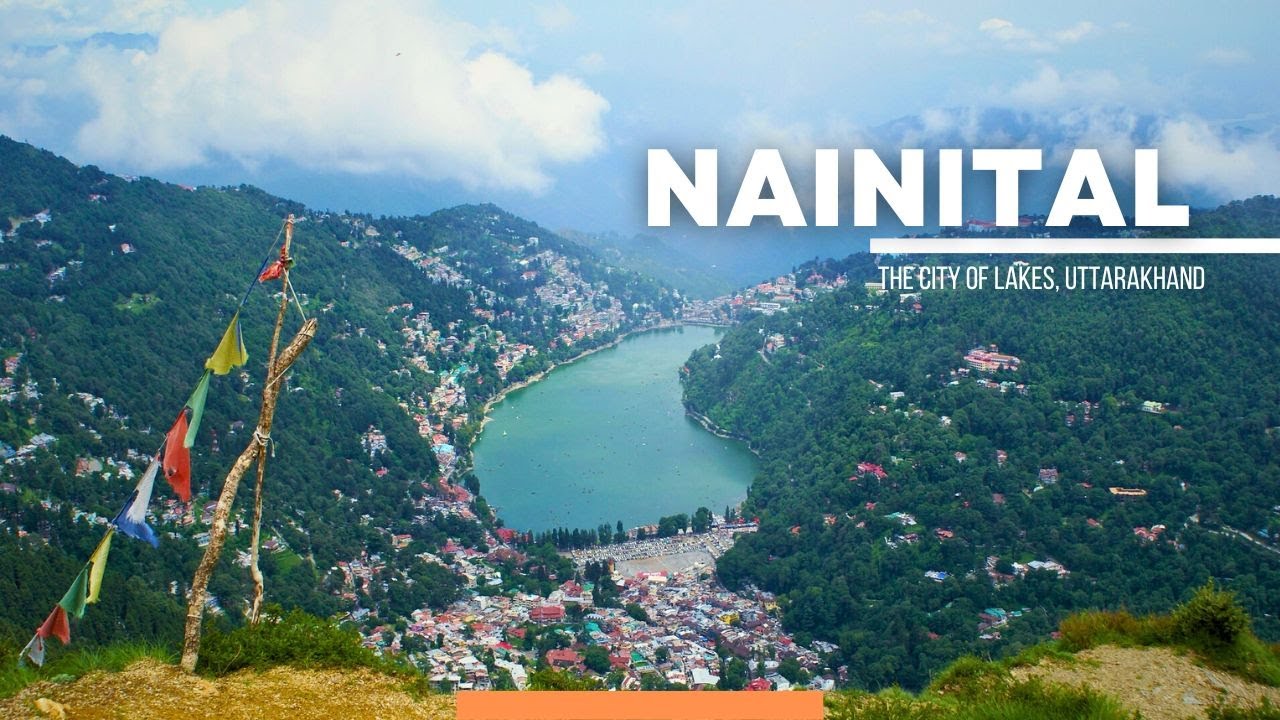
After breakfast, drive the short 11 kilometres from Bhimtal to Nainital — the jewel of Kumaon and one of the most celebrated hill stations in all of India. Nainital is named after the Naini Lake — a natural pear-shaped lake cradled between seven hills at 2,084 metres altitude, whose name derives from the Hindu goddess Naina Devi, whose shrine stands on the northern shore. The lake is the absolute heart of Nainital — everything in the town is built around it, above it, or alongside it, and the reflections of the surrounding hills and the colonial-era buildings on its surface create a visual composition of extraordinary beauty.
Begin at the Naina Devi Temple on the northern bank of the lake — a highly revered Shakti Peetha built at the spot where, according to mythology, the eye (Naina) of the goddess Sati fell when Lord Vishnu's Sudarshana Chakra dismembered her body. The temple is always alive with devotion, flowers, and the sound of bells. Next, take a boat ride on Naini Lake — one of the most quintessential hill station experiences in India. Whether you choose a paddle boat, a rowboat, or the larger sailboat, gliding across the surface of this tranquil green lake with the seven hills rising around you and the Naina Devi Temple reflected below is a moment of pure, uncomplicated beauty.
Take the ropeway from Mallital to Snow View Point (2,270 metres) — the highest accessible viewpoint above Nainital — for a panoramic view of the Kumaon Himalayan range including the peaks of Nanda Devi, Trisul, and Nanda Kot, all clearly visible on clear days. Walk the famous Mall Road — Nainital's colonial lakeside promenade lined with Victorian-era hotels, cafes, bookshops, woollen stores, and toy shops — for an afternoon of shopping and cafe-hopping. Visit the Tiffin Top (Dorothy's Seat) viewpoint by horse or on foot for one of the finest views in Kumaon: a sweeping panorama taking in Naini Lake below, the surrounding hills, and on clear days the full arc of the Himalayan horizon. Return to hotel by evening.
Overnight: Hotel, Nainital or Bhimtal
Meals: Breakfast, Dinner
Today the tour enters its most dramatically different chapter — trading the manicured hill stations for the raw, primal heart of Uttarakhand: the Jim Corbett National Park, India's oldest national park, established in 1936, and the birthplace of Project Tiger in 1973. En route, you pass through the small village of Nimkroli — a charming, quiet settlement on the edge of Corbett's buffer zone in the Ramnagar area, known for its forest views, bird life, and traditional Kumaon rural character. Nimkroli serves as a gateway community to the park and has a growing number of forest lodges and resorts that allow visitors to experience the sights and sounds of the jungle from their doorstep — peacocks calling in the morning, elephants heard in the distance at night, and the rich dawn chorus of Corbett's extraordinary bird life filling the forest air.
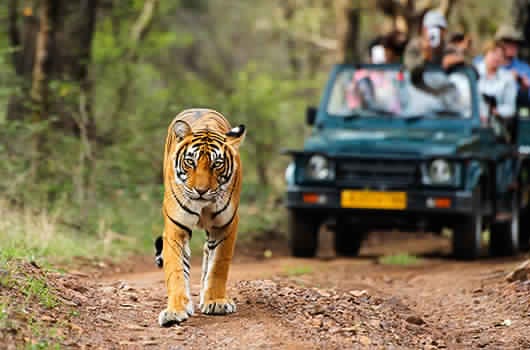
Jim Corbett National Park spans an area of 1,318 square kilometres across the Pauri Garhwal and Nainital districts, centred on the Ramganga River valley and encompassing a rich diversity of habitat — sal forest, riverine grassland, hillside scrub, and terraced agricultural land on the buffer margins. It is home to one of the highest densities of Bengal tigers in India, along with leopards, Asiatic elephants, sloth bears, sambar deer, spotted deer, wild boar, Indian civets, porcupines, and an extraordinary diversity of bird life — over 600 recorded species, making it one of the finest birdwatching destinations in Asia.
The highlight of the day — and arguably of the entire tour — is the Jim Corbett Jeep Safari. Jeep safaris enter specific zones of the park at designated times (morning 6:00–9:30 AM and afternoon 3:00–5:30 PM) with a certified naturalist guide. The Dhikala Zone offers the finest wildlife viewing in open grassland habitat with the Ramganga reservoir visible in the background. The Bijrani Zone is excellent for tiger sightings in mixed forest. The Jhirna Zone is known for good leopard and bear sightings and is open year-round. Your group safari is included in the package (one safari per person in a park jeep) and is managed by the tour coordinator in advance. After the safari, visit the Garjia Devi Temple — a beautiful, ancient Devi temple set dramatically on a large boulder in the middle of the Kosi River, surrounded by forest and accessible via a suspension footbridge — before checking into the forest resort for the night.
Overnight: Resort/Hotel, Jim Corbett / Nimkroli
Meals: Breakfast, Dinner
Distance: Bhimtal/Nainital → Jim Corbett (approx. 65 km)
Wake up one last time to the extraordinary sounds of the Corbett forest — the alarm calls of spotted deer, the distant trumpet of an elephant, the melodious notes of the white-rumped shama and the Indian paradise flycatcher drifting through the early morning air. If the safari timing allows, some groups opt for a second morning safari before departure (own expense). Have a final hearty breakfast at the resort, completing your checkout by mid-morning. The Tempo Traveller departs Jim Corbett heading south via Ramnagar, through the Terai flatlands of Uttarakhand, and then onto the National Highway via Moradabad and Ghaziabad back towards Delhi.
The return drive of approximately 260 kilometres takes 5 to 6 hours depending on traffic. Plan a lunch halt at Moradabad — a city famous throughout India for its brass metalwork industry — where you may wish to browse the brass bazaars for handcrafted lamps, pots, and decorative pieces to take home as souvenirs. The Tempo Traveller arrives back in Delhi at your designated drop-off point by early to mid-evening. As you step off the vehicle, you bring back with you something no luggage can fully carry — the memory of fire floating on the sacred Ganga at Haridwar, the roar of white water beneath your raft at Rishikesh, the panorama of snow peaks from Mussoorie's Gun Hill, the perfect stillness of Bhimtal Lake at dawn, the reflections of the Naina hills in Naini Lake's surface, and the electric silence of the Corbett forest as your jeep engine cut out and a tigress moved soundlessly through the sal trees thirty metres ahead.
Tour Ends. Safe travels and thank you for choosing this journey!
Meals: Breakfast included | Lunch at own expense en route
Distance: Jim Corbett → Delhi (approx. 260 km)
Cost
The Cost Includes
- Air-conditioned Tempo Traveller (10+1 or 12+1 seater) for the entire tour from Delhi to Delhi
- Professional, licensed driver familiar with Uttarakhand mountain roads and ghats
- Dedicated tour coordinator accompanying the group for the full duration
- 08 nights accommodation in clean, well-located hotels (twin/triple sharing basis)
- Daily breakfast and dinner at all hotels (vegetarian and non-vegetarian options)
- All toll taxes, state border taxes, parking charges, and vehicle permits
- All fuel charges for the Tempo Traveller throughout the tour
- Applicable GST on transport and accommodation as per government norms
- Jim Corbett National Park zone entry permit (one jeep safari per person included)
- Complimentary mineral water — 01 bottle per person per travel day
- First aid kit onboard the vehicle throughout the journey
- 24x7 emergency helpline support throughout the tour
The Cost Excludes
- Train or flight fare to/from Delhi
- Lunches and any meals not mentioned in the itinerary
- Ganga Aarti boating at Haridwar (own expense)
- White-water rafting charges at Rishikesh (own expense — booked locally)
- Ropeway tickets at Mussoorie (Gun Hill) and Nainital (Snow View Point)
- Boating charges at Naini Lake, Bhimtal Lake
- Entry fees at temples, gardens, waterfalls, and viewpoints
- Pony rides, horse riding, or adventure activities at any destination
- Personal expenses — laundry, tips, telephone, internet, shopping
- Travel insurance (strongly recommended)
- Camera and videography charges at national park and monuments
- Any expenses arising from natural calamities, road closures, or force majeure
- Additional nights or meals beyond the itinerary
- Any item not explicitly mentioned under Inclusions
All About Your Trek
Embark on an exhilarating trekking journey that immerses you in the pristine beauty of nature and the rich cultural heritage of the region. This trek offers a perfect blend of adventure, breathtaking scenery, and meaningful local encounters, making it an ideal choice for those seeking to connect deeply with the environment and people.
Route & Terrain:
The trek covers a diverse landscape, ranging from dense forests and terraced fields to rocky mountain paths and high-altitude meadows. You’ll traverse well-marked trails that challenge your endurance while rewarding you with spectacular panoramic views. Some sections may involve steep ascents and descents, so a good level of physical fitness and stamina is recommended.
Duration & Pace:
This trek typically lasts [X days], allowing you to enjoy a balanced pace that combines daily trekking with time to rest and explore local villages. Each day’s walk averages between 4 to 7 hours, giving you ample opportunity to soak in the scenery and capture stunning photographs.
Accommodation & Facilities:
Overnight stays are arranged in traditional teahouses or mountain lodges, offering basic yet comfortable amenities. These cozy accommodations provide a chance to experience the warmth of local hospitality, enjoy hearty home-cooked meals, and recharge for the next day’s trek.
Cultural Experience:
Beyond the natural beauty, this trek provides a unique window into the life of indigenous communities. You’ll meet friendly locals, learn about their customs, traditions, and way of life, and perhaps even participate in cultural activities or festivals depending on the timing of your visit.
Best Time to Visit:
The optimal trekking seasons are during the spring months of March to May and the autumn months of September to November. During these periods, the weather is generally clear and stable, with moderate temperatures and minimal rainfall, ensuring safer trekking conditions and breathtaking visibility.
Preparation & Packing Tips:
To make the most of your trek, pack wisely. Essential items include sturdy trekking boots, layered clothing for fluctuating temperatures, rain gear, sun protection such as hats and sunscreen, a reusable water bottle, and personal medication. It’s advisable to keep your backpack light and prioritize comfort and functionality.
Health & Safety:
Your safety is our utmost priority. The trek is guided by experienced professionals who are well-versed in mountain safety and first aid. They continuously monitor weather and trail conditions to ensure a secure experience. Remember to stay hydrated, pace yourself, and communicate any discomfort to your guide immediately.
Environmental Responsibility:
We encourage all trekkers to practice responsible tourism by minimizing waste, respecting wildlife, and preserving the natural environment. Carry out all trash, avoid disturbing flora and fauna, and support local conservation efforts by purchasing souvenirs directly from artisans.
Additional Support:
Should you have any specific requirements or need assistance in planning your trek, our team is available to provide personalized advice and support. We also offer options for porter services or mule assistance to help carry your luggage, making your trek more comfortable.
FAQs
General
Yes, with some planning. The itinerary is paced comfortably and the Tempo Traveller provides a relaxed travel experience. Haridwar, Rishikesh, Mussoorie, Bhimtal, and Nainital are all very family-friendly. The Jim Corbett jeep safari is appropriate for children above 6 years of age. We recommend a medical consultation before travel for elderly persons with altitude or cardiac concerns, as Mussoorie and Nainital reach approximately 2,100 metres.
Yes. All rafting operators provide certified life jackets, helmets, and trained safety kayakers at every rapid. Beginners and non-swimmers are guided in the shorter, milder Brahmpuri to Rishikesh stretch (Grade I–II rapids). The guides will brief you thoroughly before the raft enters the water. Rafting is at own expense and entirely optional.
Connectivity is generally good in Haridwar, Rishikesh, Dehradun, Mussoorie, and Nainital. Signal becomes patchy in the forested areas of Jim Corbett and on some stretches of the mountain roads. Carry a power bank. BSNL and Airtel connections tend to have the best coverage in Uttarakhan
One safari is included in the package (morning or afternoon zone safari per person in a park jeep). A second safari can be booked at own expense through our tour coordinator on the day of arrival at Corbett, subject to availability. Advance booking is strongly recommended for Dhikala Zone as it has limited seats.
A: The main roads are well-maintained national and state highways. The ascent roads to Mussoorie and Nainital are paved and regularly used, though they involve significant winding stretches with hairpin bends. During monsoon, landslide risk increases on some sections. Our driver is experienced on these routes and follows all safety protocols.
A: Both are equally worthwhile but offer completely different experiences. Nainital is more developed, vibrant, and full of activity — ideal for shopping, boating, and the colonial hill station experience. Bhimtal is quieter, more natural, and less crowded — ideal for relaxed lakeside stays, birdwatching, and unwinding. We recommend at least one evening and morning at Bhimtal Lake for its extraordinary peace and beauty.
A: Uttarakhand's mountain roads can occasionally be blocked during the monsoon season. In such situations, our tour coordinator works with local authorities and alternative routes are used wherever possible. Safety is always the first priority. We advise all travellers to purchase comprehensive travel insurance that covers trip disruptions.
A: Yes, absolutely. This package can be customised for groups of 4–20 persons. Smaller groups travel in Innova or similar SUVs; larger groups use two Tempo Travellers. Itinerary duration, pace, specific destinations, accommodation category, and budget can all be tailored to your group's requirements. Contact us for a custom quote.